One of our most ambitious projects to date was sending a VIVE Focus 3 to the International Space Station with partners, to see how astronauts can benefit from VR in zero-gravity. It's a huge challenge because of how VR headsets are built and rely on gravity. But we solved it, with incredible results.
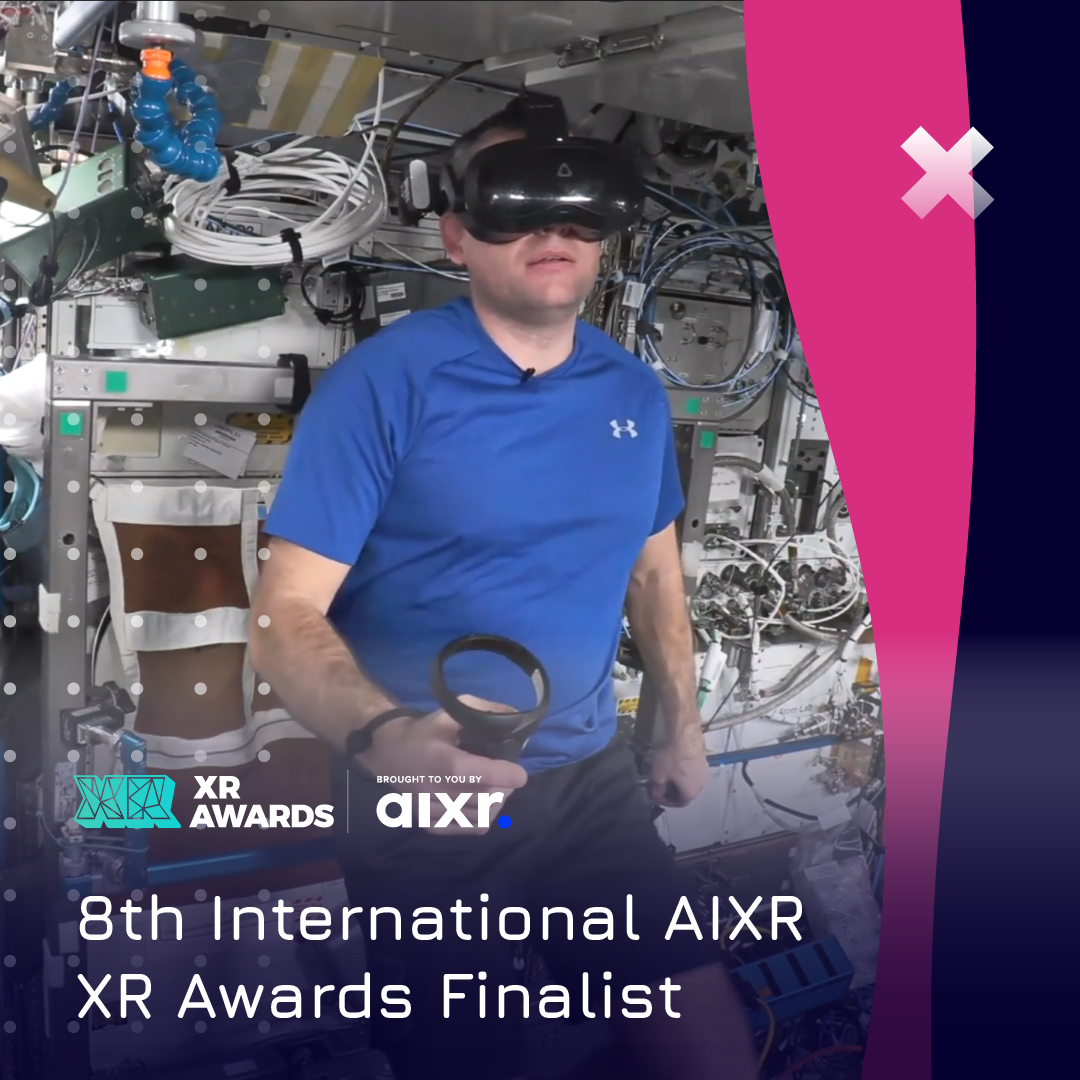
And that's why it's amazing to be recognised by the AIXR Awards as a finalist for the coveted Obsidian Award.
Life on the International Space Station is hard. For months at a time astronauts live in a noisy, clinical set of rooms without ‘natural’ light where they are surrounded by the constant hum of machines, screens, and electronic devices. Privacy is limited, sleeping spaces are cramped, and meals include freeze-dried food and recycled water. It’s a highly stressful environment, and the crew needs to be ready to act quickly if an alarm sounds, and every day is packed full of scheduled activities and experiments to maximize their time.
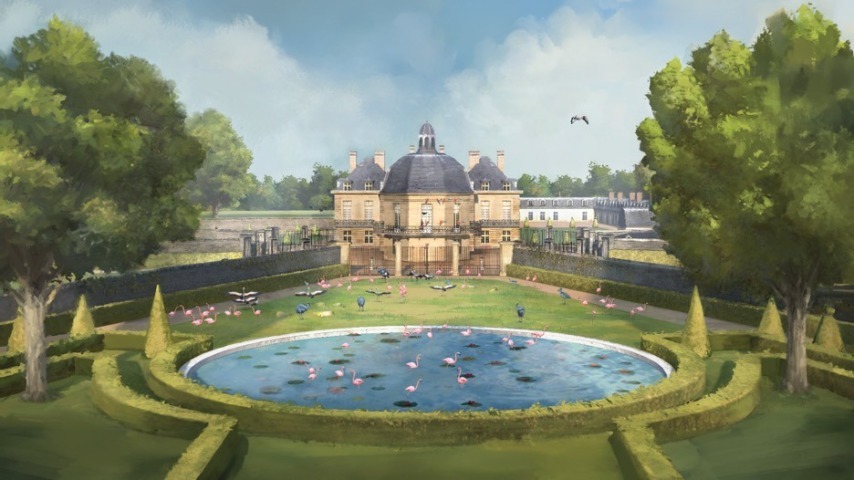
HTC VIVE, Nord-Space Aps, and XRHealth partnered to create a virtual assistance mental balance initiative, running on VIVE Focus 3. The main goal of the VR-based therapy was to give Huginn-mission astronauts a break from the isolating environment and allow them to be transported to another place.
The headset was used by European Space Agency’s Danish astronaut Andreas Mogensen, Commander of Expedition 70 on the ISS for the duration of his six-month mission.
On Earth VR headsets rely on gravity vectors to align orientation. The microgravity environment on the ISS paired with spacecraft mechanics causes constant jittering, rolling, and drifting of content which leaves astronauts unable to read, see, or control the content in a headset, and even causes motion sickness.
VIVE configured a VIVE Focus 3 headset to the microgravity conditions of space. Inspired by our industry-leading Location Based Software Suite (LBSS), our team developed a special tracking method which utilized a controller as an anchor point.
The basis of this solution is in arcades and businesses all over the world. On Earth we call it SimulatorVR mode, and it’s used for VR roller coasters and immersive motion simulators as well as flight training and advanced driving sims.
In SimulatorVR mode, a VIVE Focus 3 controller or VIVE Wrist Tracker is fixed to a set position as an anchor, telling the headset where to base all it’s movement from. On the ISS, this effectively replaces the missing gravitational field and allows for content to stay aligned and stable in microgravity.
Maintaining power onboard presented another obstacle. As you’d expect, it’s vital to minimize risk on the ISS, and this includes batteries. In order to ensure the power source was consistent and capable, the VIVE Focus 3 was adapted to work with the ISS’s native power supply.
Following the successful use to support with mental health, the mission was expanded to include physical health, using a FERGO exercise bike and VR experience built by the Danish Aerospace Company.
To combat the sterile and bland interior of the ISS, Andreas wears a VIVE Focus 3 and has a visually and physically matched experience when cycling. As he cycles, the scenery moves in time, and the VIVE Focus 3 sends information via Bluetooth to FERGO, which provides resistance as he cycles uphill or on different surfaces. There are five different cycling routes for Andreas to enjoy, filmed in his native Denmark.
Andreas is an ambassador of the WILD Nature Foundation, and speaking to them on 17 January 2024, while he was still in space, he said, “I miss the earth. I do. It's a beautiful sight to sit in the Cupola and look down on Our Blue Planet, but it's not the same. I miss the feeling of the warm sun. I miss the breeze. I miss the smell of the grass and the trees. I just miss opening a door and stepping outside - I do yes, and the sound of nature. It's a very very unnatural laboratory we're in. One of the experiments I have here is a virtual reality set I use to refresh myself to help my psyche, and it's actually wonderful. One of the things I love about this virtual reality set, is the sound, hearing the sound of the birds chirping, hearing the sound of the wind blowing through the reeds and through the leaves. I love that and it's something I miss.”
Andreas delivered further thoughts in a video from the ISS, “I get a feeling of being in nature when I wear it (the VIVE Focus 3)... I can almost feel the warmth of the sun.”
Notably he said, “I have to be honest, I didn’t expect this headset to make much of a difference. But I found that I love wearing this headset... It makes me feel like I’m outside of the space station, away from this artificial environment. It de-stresses me, it makes me relax, it takes away a lot of the daily stress, and allows me to re-energise.”
Speaking about cycling he said, “It’s one of my favourite things to do on board of the space station... It’s so motivating, and at the same time I feel like I’m out in nature enjoying a nice bike route through the woods or along the beach.”