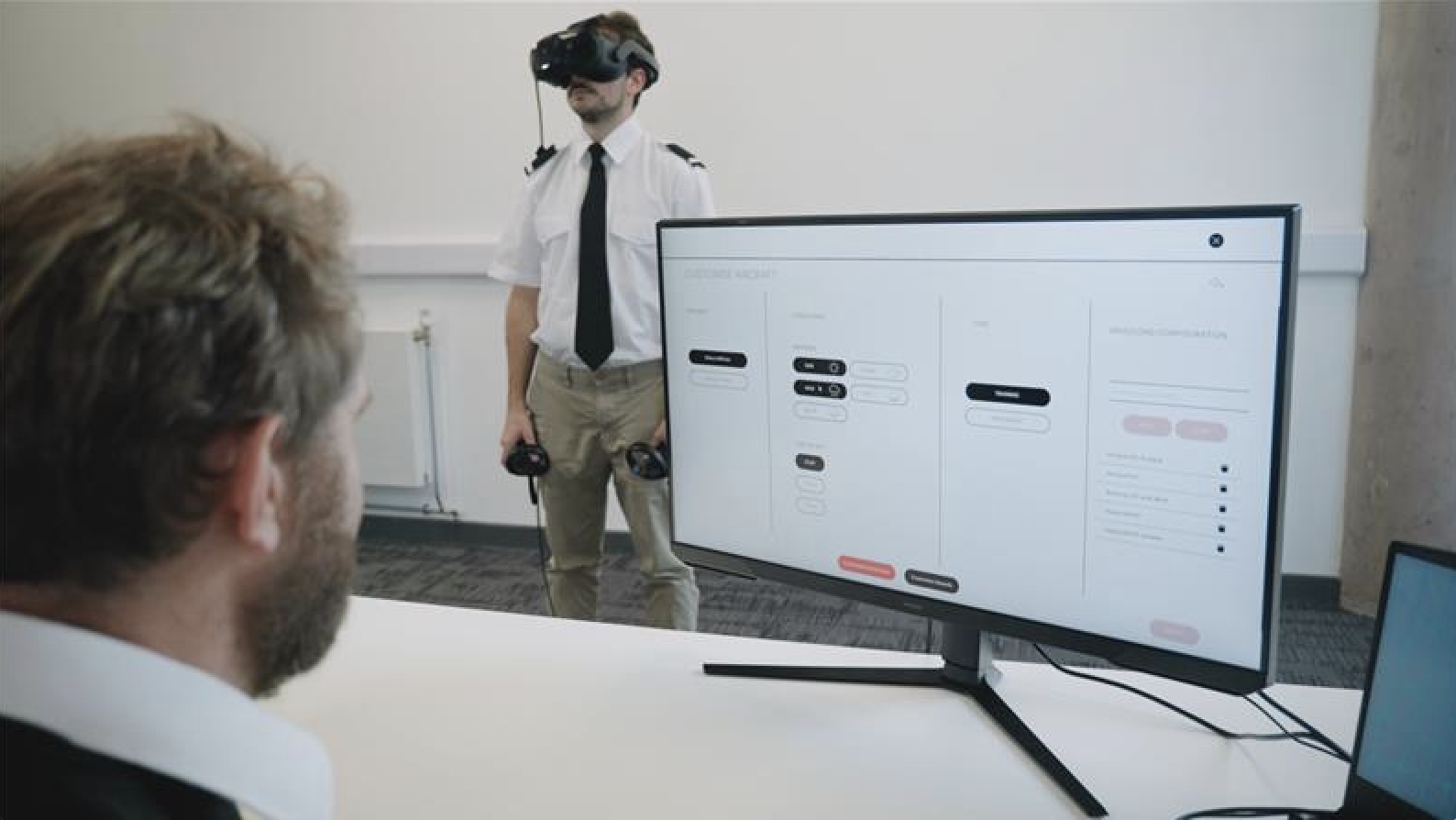
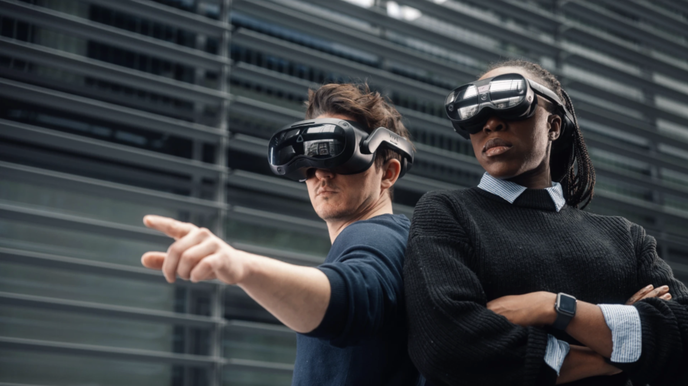
Cineon, a leader in AI, immersive technology and eye-tracking for training and assessment, has gained UK Civil Aviation Authority (CAA) approval for its TACET (Training Aircrew Competencies Using Eye Tracking) Walkaround as an Other Training Device (OTD). This is the first time a VR-based device has been approved for pilot training by the CAA.
The pre-flight walkaround is one of the most safety-critical procedures in aviation, yet training is often limited by weather conditions, aircraft availability, and the inability to replicate defects or hazards without risk.
Cineon’s TACET Walkaround resolves these issues by creating a repeatable, high-fidelity virtual environment where pilots can carry out realistic inspections before they step onto the tarmac. The system uses in-built eye-tracking to understand where the trainee is looking and if critical information has been absorbed and acted upon. Compatible with multiple aircraft types, including the Boeing 737-800 and Airbus A321-Neo, the solution can be adapted to support other fleets.
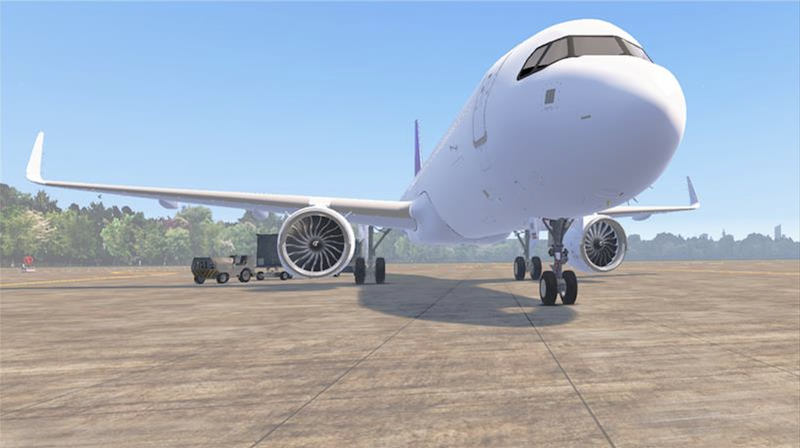
At the core of TACET Walkaround is Cineon’s Empathic Learning Engine (ELE) – an emotion AI API trained on millions of human interactions. ELE interprets behavioural and eye-tracking data to measure scanning efficiency, situational awareness and visual attention alongside inspection time and hazard detection. This provides objective feedback and measurable assessment, supporting the aviation sector’s move towards competency-based training and assessment (CBTA).
“Approval of TACET Walkaround by the CAA represents a breakthrough for aviation training,” said Toby de Burgh, CEO of Cineon. “It demonstrates that immersive and data-led approaches can not only meet but exceed regulatory standards. With our emotion AI powering TACET, we are combining realism, repeatability and measurable insights to help airlines raise the bar for pilot readiness and safety.”
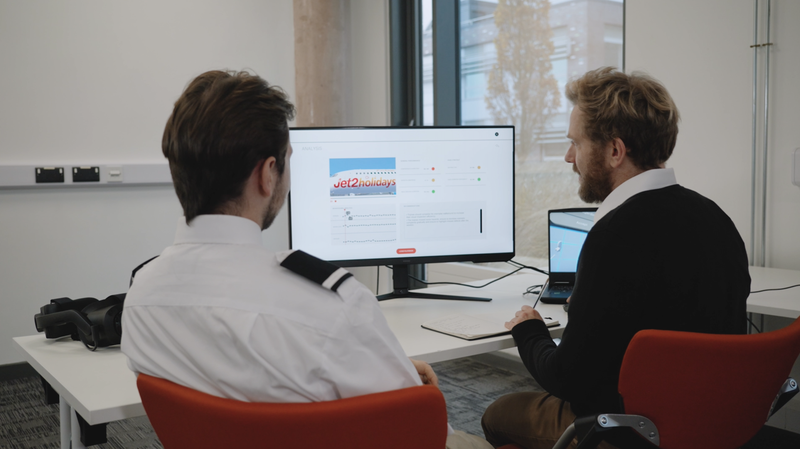
Jet2.com, one of the UK’s leading airlines, has installed six VIVE Focus Vision headsets across its Manchester and Bradford training centres, becoming the first airline to adopt this CAA-approved VR training solution.
Captain Christopher Harris, Head of Crew Training (NPCT), Jet2.com, said: “At Jet2.com, safety is our top priority, and training plays a critical role in that commitment. Partnering with Cineon to implement TACET Walkaround in our Manchester and Bradford training centres allows our pilots to experience a realistic, measurable and CAA-approved simulation of pre-flight inspections. This innovative approach ensures they gain the skills and confidence they need before stepping onto the tarmac. We are proud to be leading the way in adopting technology that can enhance both safety and efficiency across our pilot training programmes, and we look forward to exploring the wider potential of TACET in future training initiatives.”
Thomas Dexmier, VP of HTC VIVE EMEA, added: Immersive technology is changing how we learn, and having CAA approval of a VR-based device for pilot training for the first time is huge validation of its impact and effectiveness. Jet2's adoption of Cinneon's solution puts this innovation into practice, with AI and VR being actively used to train its pilots and put safety at the forefront. Using VIVE Focus Vision, integrated eye tracking combined with the emotion AI in TACET, these training scenarios are more realistic, measurable and repeatable.”
TACET Walkaround delivers:
TACET Walkaround is part of Cineon’s flagship TACET platform, which applies immersive technology, eye-tracking and emotion AI across aviation and defence. The flight training TACET module has been deployed in both civil and military pilot training, demonstrating the scalability of the system to multiple tasks, environments and aircraft types.